Beyond the Basic Linktree for Instagram Bio: 4 Link Tools for Creators Compared
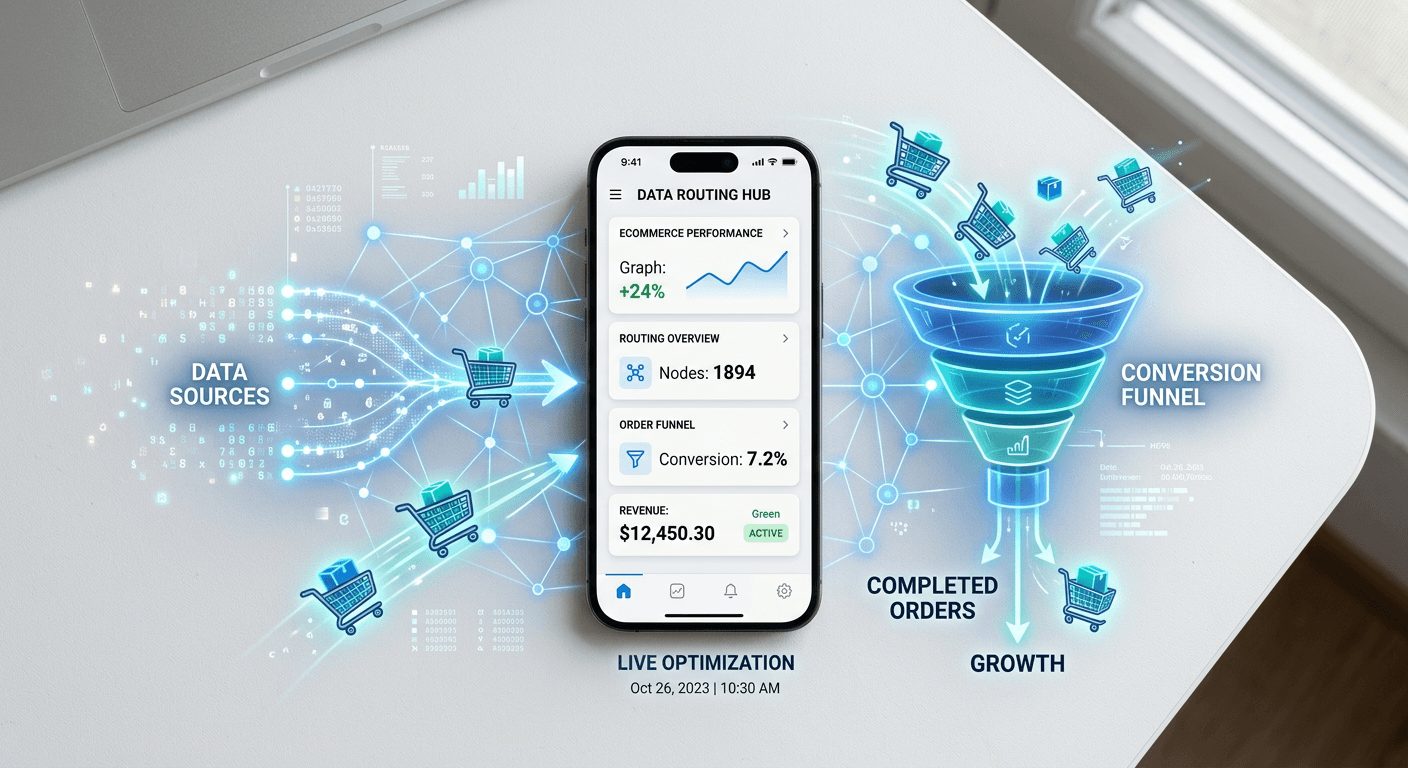
The most pervasive misconception teams bring to their social media architecture is treating their profile URL as a static directory. Deploying a basic linktree for instagram bio is often the default reflex when a channel begins generating traffic, operating on the assumption that simply listing out available destinations is enough to capture audience interest. In reality, routing traffic is only a fraction of the structural challenge. The moment a user taps a profile link, the underlying platform dictates whether that attention is captured, monetized, or lost entirely to friction. Finding the appropriate link in bio tool for creators means shifting the perspective from simple URL aggregation to choosing the correct conversion mechanism for your specific commercial goals.
Quick Summary
A professional link management platform serves as a mobile-optimized routing layer that consolidates a creator's digital assets into a single accessible endpoint. Moving beyond basic directories allows operators to deploy direct checkouts, capture first-party data, and control the user experience without requiring followers to navigate away from their native social environments.
- Pure routing engines prioritize loading speed but often restrict domain ownership.
- Storefront models remove purchase friction but demand immediate commercial commitment.
- Audience capture platforms focus on data retention over direct immediate monetization.
- Transaction fees and layout constraints vary heavily depending on the chosen structural approach.
Table of Contents
- Why Traffic Routing Requires Intentional Architecture
- How to Choose the Right Architecture
- 1. Linktree
- 2. Beacons
- 3. Lnk.Bio
- 4. Stan Store
- Mapping Your Traffic to the Right Category
Why Traffic Routing Requires Intentional Architecture
Pushing raw social traffic to a heavy desktop-oriented website routinely results in catastrophic bounce rates. Mobile browsers triggered inside applications like Instagram or TikTok are intentionally constrained, meaning any latency or complex navigation causes immediate user abandonment. The primary function of an intermediate landing page is to bridge that gap, serving lightweight, high-contrast decision points that load within milliseconds.
However, treating all profile links as identical ignores the underlying data processing differences. Some systems parse clicks and forward the user to an external domain. Others render an iframe containing a native checkout flow, pulling the payment processing directly into the social application's browser. Deciding which mechanism to trust requires examining how a specific platform handles your data, what tax it levies on your transactions, and whether it permits you to retain the relationship with the audience once the initial interaction concludes.
| Product | Platform Primary Function | Features | Pros | Cons | Target Audience |
|---|---|---|---|---|---|
| Linktree | Navigation-First | Automated DMs, tiered platform fees | High recognition, rapid deployment, scalable tiers | Custom domains unavailable, capped DM automation, layout rigidity | High-volume publishers requiring immediate outbound routing |
| Beacons | Audience-First | AI generation, email integration | Extensive data capture, zero fee on top tier, robust integrations | Free tier constraints, 9% base fee, feature density | Content operators focused on list building and lead generation |
| Lnk.Bio | Navigation-First | Swipeable pages, grid layouts | Lifetime payment option, media embedding, straightforward interface | Domain costs extra, visible branding on base tiers, limited commerce | Operators seeking fixed costs over complex storefronts |
| Stan Store | E-Commerce-First | In-app checkout, calendar booking | Zero platform fee, frictionless payments, specialized for digital goods | No free tier, withdrawal flat fees, subscription cost | Digital product vendors requiring immediate conversion |
How to Choose the Right Architecture
Evaluating these systems requires separating them by their underlying commercial logic rather than their visual templates. A tool built to aggregate affiliate links processes user behavior fundamentally differently than one engineered to sell downloadable assets. To make an accurate assessment, we must classify these options along a specific axis: Platform Primary Function.
There are three distinct categories within this lens. Navigation-First platforms act as high-speed digital switchboards, built entirely to push visitors to external properties as quickly as possible. They strip away heavy media in favor of lightweight text blocks. Audience-First platforms function as top-of-funnel capture mechanisms, prioritizing email collection, lead generation, and demographic analytics over immediate sales. Finally, E-Commerce-First platforms operate as localized merchant processors, designed to keep the user inside the mobile browser window until a transaction is completed.
Practical rule: Never evaluate a subscription cost in isolation from a platform's transaction fees; a free monthly tier that takes a double-digit percentage of every sale is functionally the most expensive option for high-volume vendors.
For operators aiming to centralize these diverse requirements, deploying an all-in-one link platform can prevent the friction of maintaining multiple disconnected software environments. Recognizing your primary operational goal is what prevents paying for specialized features your traffic will never utilize.
1. Linktree
The moment a follower taps a profile link, the server has a fraction of a second to render the routing choices before the platform's native browser triggers a bounce. Linktree is a Navigation-First platform that lets creators compile multiple outbound links into a single landing page for social media, focusing on raw delivery speed and simplified button architecture.
Direct URL routing drives the entire setup. Code stays extremely lightweight. This ensures near-instantaneous loading even on poor cellular networks. Rather than hosting complex media or localized checkouts, it forwards the user to the intended destination while pinging analytics servers to track the outbound click. Monthly billing includes Free ($0), Starter ($8/month), and Pro ($15/month), capping at a Premium tier.
Ubiquity brings hard ceilings on brand control
Attempting to white-label the experience exposes a rigid structural boundary. Replacing the standard 'linktr.ee/username' URL with a custom domain is not supported on any plan. Operators borrow brand equity from the platform. They cannot build their own. The Free plan charges a platform fee on digital product sales. This overhead decreases on Starter and Pro before vanishing on the Premium tier. Automated Instagram replies face strictly enforced monthly volume caps. These limits scale up across the paid plans. I would hesitate to deploy this for high-volume digital sales purely due to the transaction overhead on the lower tiers.
Deploy this router when raw loading speed and recognizable navigation outweigh the necessity for deep brand customization.
Pros
- High trust recognition among average social media users
- Extremely low latency on cellular connections
- Tiered system allows gradual scaling of automation features
Cons
- Complete inability to connect a custom domain
- Punitive 12% transaction fee on the baseline tier
- Strict caps on direct message automation
2. Beacons
Unlike purely navigational routers that simply push traffic elsewhere, Beacons operates as a lightweight data capture system designed for creators to manage multiple links, sell digital products, and compile media kits. It targets operators who view their profile link as the beginning of a sustained relationship rather than a fleeting transaction.
Extensive API integrations power the backend, linking directly with external email marketing databases and utilizing artificial intelligence to generate layout blocks. By embedding these capture forms directly into the mobile view, it reduces the steps required for a visitor to hand over their contact information. Retaining user data remains the core priority of this Audience-First platform. Subscription options include a Free plan ($0), Creator ($10/month), and Creator Plus ($30/month), capping at a Creator Max tier.
Creator features scale with your subscription tier
Communication bandwidth creates immediate bottlenecks for baseline tier users. The Free plan severely restricts monthly email marketing sends, falling short for any serious audience engagement. Furthermore, daily AI credit allowances increase substantially when upgrading to the Creator plan. If you intend to monetize, the Free and Creator plans impose a transaction fee on digital product sales, which disappears only on Creator Plus. I would choose this architecture if the primary objective was harvesting email addresses, provided the operation was prepared to absorb the immediate upgrade costs once traffic scaled.
Select this data capture engine when list building takes precedence over immediate outbound link routing.
Pros
- Deep integration with external marketing software
- Built-in artificial intelligence for block generation
- Creator Plus entirely eliminates the platform transaction fee
Cons
- Email functionality is practically unusable on the free tier
- Base plans levy a 9% tax on digital product revenue
- Feature density can overwhelm simple navigation needs
3. Lnk.Bio
According to its published pricing, Lnk.Bio offers a one-time lifetime payment option, standing out in an industry dominated by recurring revenue models. It is a multi-link platform allowing creators to organize links, embed media, and build simple landing pages without incurring ongoing monthly overhead.
A grid-based media embedding mechanism renders images and external video frames side-by-side rather than forcing everything into a vertical list of text buttons. This allows for a highly visual presentation that mimics the aesthetic of platforms like Instagram. Layout flexibility dictates the design of this Navigation-First tool. It offers a Free plan ($0), a Mini Monthly subscription ($0.99/month), and a one-time lifetime payment plan for Mini ($9.99), with an additional Unique lifetime tier.
Predictable pricing offsets aesthetic constraints
Avoiding monthly fees forces a commercial trade-off. Professional presentation elements face aggressive gating. Lnk.Bio branding appears permanently on Free and Mini profiles. Only the Unique plan removes this mark. The Mini plan strictly caps swipeable pages. The Unique plan expands this allowance. Connecting an existing custom domain requires a separate annual add-on charge. True white-labeling never becomes a purely one-time cost. I would rule this out if frictionless, native digital product sales were the core business objective, as its focus remains firmly on media routing.
Implement this grid layout when securing a fixed operational cost matters more than native storefront processing.
Pros
- Availability of a genuine one-time payment structure
- Swipeable page mechanics allow for segmented content
- Highly visual grid formatting suits aesthetic portfolios
Cons
- Custom domain integration triggers a separate annual fee
- Forced platform branding on the lower pricing tiers
- Swipeable pages are strictly capped unless on the highest plan
4. Stan Store
When does a profile URL need to operate as an independent payment gateway rather than a directory? Stan Store answers this by functioning as an e-commerce storefront and link-in-bio tool enabling creators to sell courses, appointments, and digital downloads directly at the point of origin.
An in-app checkout flow processes payments directly. Instead of pushing a buyer to an external website - which routinely causes the social application's browser to crash or prompt security warnings - it renders the entire credit card input and file delivery sequence natively. Closing a transaction dictates every feature within this E-Commerce-First platform. Pricing tiers reflect this enterprise focus, including the Creator plan at $29/month (or $300/year) and Creator Pro at $99/month, alongside its own annual option.
E-commerce capabilities require immediate commercial commitment
The complete absence of a complimentary baseline tier creates an uncompromising barrier to entry. There is no free tier, though a time-limited free trial is available for both Creator and Creator Pro plans. While no platform transaction fees are charged on sales, standard credit card payment processor fees still apply. Crucially, the liquidity of those funds is taxed: payout withdrawals carry an additional percentage and flat fee per transaction on top of standard processing fees. I would hold off on deploying this infrastructure unless the operation already possesses a proven digital product with a conversion rate that justifies the immediate monthly baseline cost.
Adopt this localized checkout engine only when your existing digital revenue easily covers the mandatory monthly overhead.
Pros
- Frictionless native checkout drastically reduces cart abandonment
- Absolute absence of percentage-based platform revenue cuts
- Built-in calendar booking specifically serves service providers
Cons
- Requires immediate paid commitment after the short trial
- Withdrawal mechanics impose flat-rate taxation on liquid funds
- Premium tier represents a significant annual expense
Mapping Your Traffic to the Right Category
Aligning your social traffic with the appropriate architectural category dictates whether that attention converts into measurable commercial outcomes. Choosing a platform based entirely on aesthetic templates rather than processing mechanisms consistently results in lost revenue and disjointed audience experiences.
For teams focused on volume and velocity, a Navigation-First platform resolves the immediate bottleneck of pushing traffic outward. If the objective is simply getting thousands of daily visitors to disparate external articles, affiliate links, or sponsor pages without the mobile browser timing out, prioritize raw speed. This approach does not suit vendors attempting to sell complex digital products, as the friction of loading secondary websites will decimate conversion rates.
Operators prioritizing data retention must shift toward an Audience-First platform. When the primary constraint is a reliance on rented social audiences, capturing first-party data through integrated forms becomes the central operational goal. This category is engineered for sustained list building rather than immediate high-ticket monetization, making it inappropriate for direct-response digital storefronts.
Finally, when the traffic is highly qualified and ready to purchase, an E-Commerce-First platform removes the structural barriers to transaction. By localizing the payment processor within the social application's native environment, these systems maximize impulse conversions. They demand upfront financial commitment and strict operational focus, making them completely unsuitable for casual publishers who simply need a directory of their online presence.