10 Innovative Strategies to Master Your Digital Link Strategy
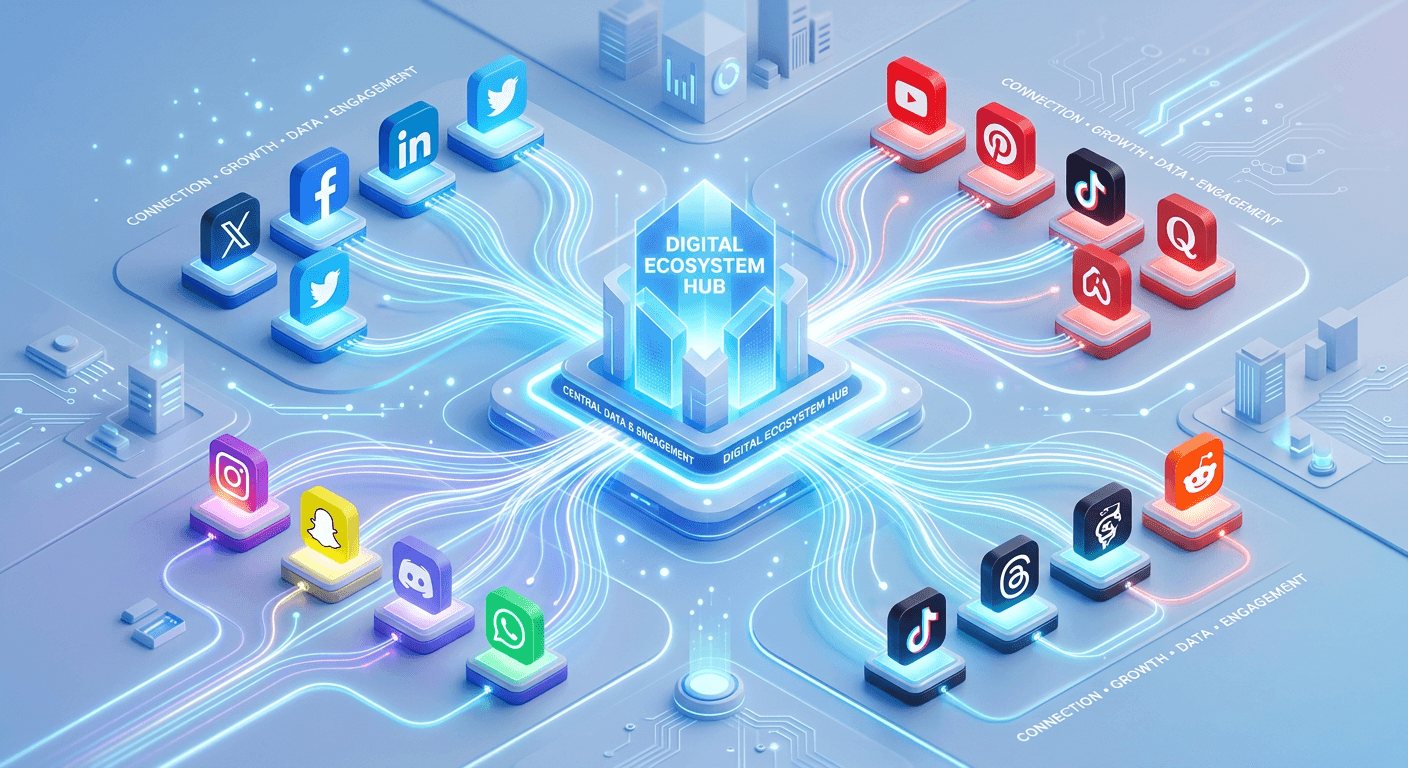
A high-performance digital link strategy serves as the central nervous system for your online presence, transforming fragmented traffic into cohesive user journeys. Whether you are a creator managing a professional brand or a business optimizing conversion funnels, the way you distribute and manage your digital link infrastructure determines your ability to track, analyze, and convert audiences across disparate platforms. Mastering this ecosystem requires moving beyond simple URL shortening to a more strategic, data-driven approach that prioritizes user intent and measurable outcomes.
Quick Summary {#quick-summary}
A digital link strategy is the systematic management of hyperlinked assets across multiple web platforms to direct traffic, capture lead data, and enhance brand authority. It involves choosing the right tools to consolidate user paths, ensuring consistent tracking, and maintaining a frictionless bridge between social media discovery and landing page engagement.
- Centralize traffic via high-utility hubs.
- Implement UTM parameters for granular attribution.
- Prioritize mobile-first user experience design.
- Leverage analytics to refine pathing performance.
Table of Contents {#table-of-contents}
- 1. Consolidating Your Hub
- 2. Mastering Link in Bio Tools
- 3. UTM Parameter Architecture
- 4. Leveraging the Description Box
- 5. Progressive Profiling and Tracking
- 6. Strategic Call-to-Action Integration
- 7. Performance Auditing and Optimization
- 8. Frequently Asked Questions
- Recommended Reads

1. Consolidating Your Hub {#1-consolidating-your-hub}
Overview
Consolidation is the process of funneling scattered traffic from disparate social media channels into a single, high-converting destination or a structured landing page. Rather than forcing users to navigate complex site architectures, you provide a singular point of entry that highlights your most relevant offers or content. This strategy relies on the link management expertise found in modern professional systems to ensure that every touchpoint remains consistent with your brand identity.
Why It Matters - Real-World Impact
When traffic is fragmented, you lose the ability to track the total value of an individual user. Consolidation allows for a more accurate calculation of ROI because the entry point for your audience is streamlined. By reducing the number of clicks required to reach a conversion goal, you prevent "decision fatigue," a common psychological barrier that causes users to abandon their journey before reaching your primary offer.
2. Mastering Link in Bio Tools {#2-mastering-link-in-bio-tool-for-creators}
Overview
Using a dedicated link in bio tool for creators allows you to circumvent the "one link" limitation prevalent on platforms like Instagram and TikTok. These tools enable you to present a visual menu of links that updates dynamically. Modern iterations of these platforms have moved beyond simple lists, offering high-fidelity layouts that support video embeds, email list opt-ins, and direct commerce integration.
Why It Matters - Real-World Impact
These tools act as a mobile-optimized micro-website that lives within the constraints of social media applications. By employing a robust link in bio tool for creators, you ensure that mobile users—who constitute the vast majority of social traffic—experience a fast, intuitive interface that looks native to the device they are holding. This significantly lowers bounce rates compared to linking directly to a non-responsive desktop website.
3. UTM Parameter Architecture {#3-utm-parameter-architecture}
Overview
UTM (Urchin Tracking Module) parameters are snippets of text appended to the end of a URL that provide data to your analytics suite regarding the traffic source, medium, and campaign name. A sophisticated strategy mandates a naming convention that remains consistent across all departments, preventing data silos and fragmented reporting.
Why It Matters - Real-World Impact
Without proper UTM tagging, your analytics software will categorize all your traffic as "Direct" or "Referral," stripping away context about which specific post or campaign drove the conversion. Implementing a rigorous taxonomy allows you to measure exactly which social platform—or even which specific piece of content—is driving the highest quality leads, enabling data-backed investment decisions.
4. Leveraging the Description Box {#4-leveraging-the-link-in-the-description-box}
Overview
The link in the description box is one of the most underutilized assets in video-based social media. Viewers typically check the description to find context, resources, or products mentioned in a video. By placing a primary, high-intent call-to-action here, you align with the user's intent to learn more immediately after consuming content.
Why It Matters - Real-World Impact
This space provides a secondary, long-form opportunity to capture user interest after the emotional engagement of a video. By including a clearly labeled digital link accompanied by a brief value proposition, you turn passive viewers into active prospects. Research shows that descriptions containing clear directions see higher click-through rates (CTR) than those with generic links or none at all.
5. Progressive Profiling and Tracking {#5-progressive-profiling-and-tracking}
Overview
Progressive tracking involves monitoring how a user moves through your digital ecosystem across multiple sessions. This is achieved by combining link-based tracking with cookies or session IDs to build a comprehensive profile of user preferences over time. This approach moves beyond single-session attribution to understand the full customer lifetime journey.
Why It Matters - Real-World Impact
This granular level of detail allows for personalized retargeting strategies. If you know a user consistently clicks on links related to a specific product category, you can tailor your future social content to cater specifically to those interests. This depth of understanding effectively doubles the efficiency of your marketing spend by focusing on warm leads rather than cold traffic.
6. Strategic Call-to-Action Integration {#6-strategic-call-to-action-integration}
Overview
Placement and micro-copy are as important as the URL itself. A digital link should never exist in a vacuum. Effective integration requires a clear "why" that motivates the click—such as "Download our industry report" instead of "Click here." This strategy ensures the link is viewed as a value-add rather than a disruption.
Why It Matters - Real-World Impact
Contextual placement directly impacts your conversion rate. When a link is integrated into a narrative arc or a helpful suggestion, users are more likely to perceive it as a resource. This psychology of "utility-first" placement reduces the friction that users feel toward promotional content, leading to a more sustainable engagement model.
7. Performance Auditing and Optimization {#7-performance-auditing-and-optimization}
Overview
Regularly auditing your link infrastructure is essential to identify "link rot" (broken URLs) and outdated redirect paths. A proactive auditing schedule ensures that your digital real estate remains functional and that you aren't leaking traffic to 404 pages or outdated landing pages that no longer reflect your business goals.
Why It Matters - Real-World Impact
Broken links are more than a technical inconvenience; they are a sign of professional neglect. They result in immediate loss of trust and traffic. By automating the auditing process and reviewing click-through data quarterly, you maintain a high standard of user experience that preserves your reputation and keeps your conversion pipeline clear of obstructions.
8. Frequently Asked Questions {#8-faq}
Q: How many links should be in a bio? A: While most tools allow for unlimited links, prioritize the top 3-5 that serve your immediate business objectives to prevent choice paralysis.
Q: Do UTM parameters impact SEO? A: No, UTM parameters do not directly affect search engine rankings. Search engines are designed to ignore tracking parameters when indexing content.
Q: What is the most common mistake with digital links? A: The most common mistake is failing to track them. Without data, you cannot determine what is working and what is wasting your time.