6 Approaches to Crafting a Short Bio for Instagram in 2026
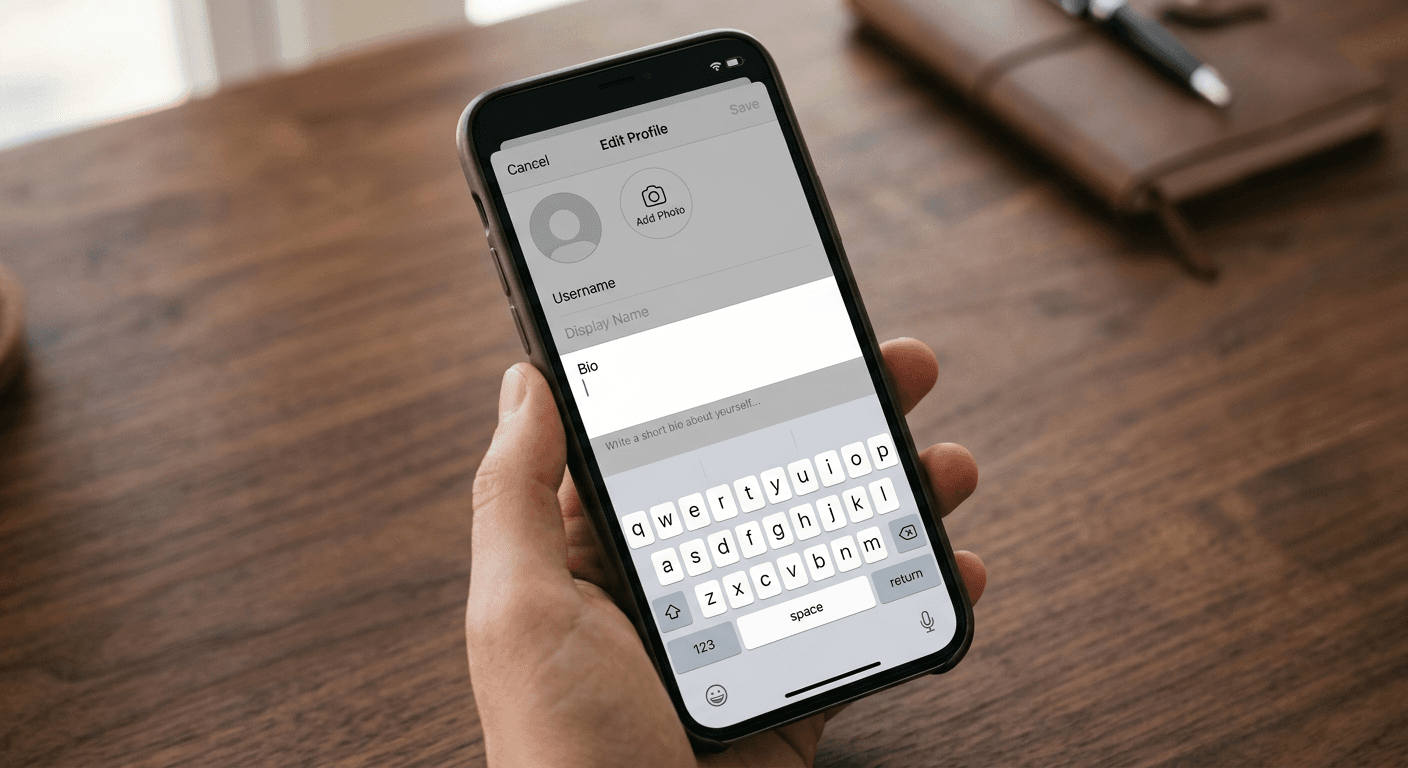
The moment a user taps your social profile, you have less than three seconds before they scroll away. The text beneath your profile picture is not a diary entry; it is a mechanical sorting system. It dictates whether a casual browser understands your niche, trusts your authority, or clicks your embedded link. Crafting a short bio for Instagram requires treating that 150-character limit like premium digital real estate, where every single word must either categorize your account for the algorithm or drive a specific user behavior.
Quick Summary
A profile description operates as a routing engine, balancing algorithmic searchability with human psychology. Selecting the right format requires aligning your text structure with your primary business objective, whether that is booking clients, building niche authority, or driving off-platform sales.
- The 150-character limit forces a hard choice between visual aesthetic appeal and text-based search optimization.
- Vertical formatting serves technical and local niches, while horizontal text suits lifestyle community building.
- Highly specific cultural or religious signaling filters out incompatible audiences immediately, improving engagement rates.
- Aggressive conversion setups sacrifice personality for maximum click-through routing.
Table of Contents
- Strategic constraints of a short bio for Instagram
- 1. The Authority Builder
- 2. The Confident Aesthetic
- 3. The Dedicated Fandom
- 4. The Faith-Forward Identity
- 5. The Relationship Marker
- 6. The Lifestyle Niche
- Choosing based on your primary bottleneck
- FAQ
- Recommended Reads
Strategic constraints of a short bio for Instagram
Before examining specific formats, you must evaluate your profile against two specific criteria: traffic intent and audience categorization. Traffic intent asks whether your goal is to keep users consuming your content on the platform, or to aggressively route them off-platform to a storefront or booking page. Audience categorization asks how quickly a stranger needs to understand your niche. A technical consultant needs immediate, rigid categorization; a visual artist can afford ambiguity. Every format below trades performance in one of these areas for dominance in the other.
1. The Authority Builder
The Authority Builder format serves freelancers, agency founders, and independent consultants who rely on social platforms as a top-of-funnel discovery engine for client work. It functions less as a personal introduction and more as a digital business card, instantly answering what you do, who you serve, and where you operate.
Rather than using horizontal sentences that force a reader to scan, this layout relies on hard line breaks to stack critical information vertically. It prioritizes the platform's searchable name field, often swapping a legal name for a targeted phrase like "Chicago Brand Designer." The body text is deliberately stripped of adjectives, presenting only raw credentials, explicit service categories, and an aggressive call to action pointing to an external portfolio. When you need a pro bio for Instagram, you are structuring your text for the platform's search indexing algorithms first, and for human readers second. The system categorizes these stark, keyword-heavy lines infinitely faster than it parses a clever joke.
Practical rule: Never duplicate the text from your display name in the body of your profile; it wastes your character limit on information the platform has already indexed.
Credibility at the expense of approachability
This rigid structure establishes immediate competence, but it actively harms creators attempting to build community-driven, parasocial relationships. If your monetization model relies on audience trust, lifestyle influence, or direct brand sponsorships rather than selling a specific service, this layout reads as heavily sterile. You are effectively handing a resume to an audience that clicked on your profile expecting a conversation. Skip this architectural approach if your primary metric is daily engagement in your stories rather than off-platform clicks to a consultation form.
2. The Confident Aesthetic
This layout is built for fashion creators, models, and lifestyle brands whose value lies entirely in their visual impact. It treats the text field not as an informational directory, but as negative space designed to frame the image grid below it.
The mechanics here deliberately ignore search engine optimization. It relies on lowercase typography, extreme minimalism, and abstract phrasing. Writing a baddie bio for Instagram focuses entirely on signaling exclusivity and attitude. It often features a single word, a highly obscure quote, or simply a location pin with no context. By refusing to explain who the creator is, the text forces the user to scroll downward into the visual content to find answers, thereby increasing time spent on the page and signaling high engagement to the algorithm.
Visual dominance masking poor search indexing
The absolute lack of keywords means this profile will never surface in organic search queries based on industry or service. It relies entirely on the algorithm pushing video content to the explore page to drive traffic. If you operate a local business requiring foot traffic, or if you sell a specific digital product that users actively search for, this minimalist approach will throttle your discovery. Skip this aesthetic entirely if you do not already possess a massive volume of highly viral visual content to carry the weight of discovery.
3. The Dedicated Fandom
Designed for animators, cosplayers, pop-culture commentators, and gaming creators, this approach targets a highly specific subculture. It functions as a digital shibboleth, instantly proving to viewers that the creator belongs to their community.
The mechanism leverages inside jokes, specific character quotes, and recognized emoji combinations that mean nothing to outsiders. Structuring a Naruto bio for Instagram, for instance, requires using exact terminology from the series that signals deep knowledge rather than surface-level appreciation. This bypasses the need for standard credentials. When a viewer recognizes the reference, they immediately project a baseline level of trust and shared interest onto the creator, dramatically increasing the likelihood of a follow.
Immediate community trust with a strict growth ceiling
While this format triggers rapid growth within a specific niche, it intentionally alienates general audiences. Anyone outside the fandom will find the profile confusing and scroll past. More critically, it creates friction with outside sponsors; a software company or a lifestyle brand reviewing the profile will struggle to understand the creator's value proposition. Skip this hyper-targeted approach if your long-term strategy involves pivoting into broader lifestyle content or securing mainstream corporate sponsorships that require a universally understood brand.
4. The Faith-Forward Identity
This approach serves ministry leaders, religious creators, and individuals whose worldview dictates every piece of media they publish. It acts as an immediate filter, establishing a foundational belief system before a user ever taps on a video or reads a caption.
The mechanism relies on stark, front-loaded symbolism rather than long explanations. Using a cross for Instagram bio formatting - often placed at the very top line or immediately next to the display name - signals the account's allegiance instantly. This is frequently followed by a specific scripture reference that anchors the creator's philosophy, functioning as a hyper-specific niche identifier. Writing a Jesus bio for Instagram is not merely a personal statement; it is a structural mechanism to categorize the audience, ensuring that those who choose to follow are already aligned with the underlying messaging. It leverages platform search mechanics by indexing religious keywords, pulling in users deliberately searching for faith-based community spaces.
Uncompromising alignment over broad demographic appeal
The primary limitation of this format is its inherent exclusivity. By placing foundational beliefs at the gateway of the profile, it intentionally narrows the potential follower base and actively repels audiences who do not share that worldview. While this creates a highly engaged, fiercely loyal echo chamber, it places a hard ceiling on general audience growth. Furthermore, this immediate categorization drastically reduces opportunities for mainstream brand partnerships, as secular sponsors often utilize automated tools to bypass profiles heavily indexed for religious terminology. Skip this approach if your primary revenue stream demands strict neutrality.
5. The Relationship Marker
Designed for family vloggers, couples, and creative duos, this structure links two distinct accounts to share audience traffic. It functions as a digital tether, passing domain authority and viewers from one profile to another.
The mechanics rely on reciprocal tagging. By placing an Instagram bio for committed relationships at the top of the text field - usually featuring an @ tag alongside a lock emoji or an anniversary date - the creator transforms their description into a clickable outbound link. This bypasses the platform's single-link constraint, routing users directly to a partner's page before they even see the external URL. The algorithm registers this constant cross-traffic, slowly merging the two accounts' demographic data so that followers of one are organically recommended the other.
Shared audience routing with intertwined reputations
This cross-pollination is excellent for joint brands, but it creates immense structural fragility. If the relationship ends, or if the two creators pivot into drastically different niches, decoupling the accounts damages both algorithmic standings. The platform's machine learning has already grouped the audiences; breaking the visual and technical link results in a sharp drop in organic reach as the system attempts to re-categorize the standalone profiles. Skip this reciprocal tagging if your individual brand operates entirely independently of your partner, or if you cannot afford the algorithmic penalty of a future rebrand.
6. The Lifestyle Niche
Built for counter-culture creators, dispensaries, and alternative lifestyle brands, this format exists primarily to navigate platform restrictions. It is an exercise in compliance and coded signaling.
The mechanism involves heavy use of age-gating statements (such as "21+") and specifically chosen emojis to bypass automated moderation filters. Crafting a stoner bio for Instagram requires a careful balance: you must clearly signal your niche to human users while avoiding the explicit text triggers that cause the platform to automatically suppress accounts promoting regulated substances. Creators here use line spacing to separate their disclaimer from their content, ensuring the platform's compliance bots read the restriction first.
Practical rule: Never use hashtags associated with regulated or prohibited substances in your profile text, as the algorithm indexes these instantly and will severely throttle your organic reach.
High niche engagement masking constant shadowban risks
This coded approach builds a highly dedicated following, but it remains incredibly fragile. Platform policy changes frequently update the automated filters, meaning an emoji combination that is safe today can trigger a shadowban tomorrow. Accounts relying on this format face sudden drops in reach without warning, and the profile text itself is often the culprit. Skip this entirely if your business model cannot survive a sudden, permanent account deletion, as operating on the edge of community guidelines guarantees eventual algorithmic punishment.
Choosing based on your primary bottleneck
Selecting the right structure means identifying exactly where your current profile is failing.
| Format | Primary Intent | Best Suited For | The Honest Trade-Off |
|---|---|---|---|
| The Authority Builder | Categorization | Freelancers, Consultants | Extremely sterile tone |
| The Confident Aesthetic | Visual Framing | Fashion, Models | Zero search indexing |
| The Dedicated Fandom | Niche Trust | Cosplayers, Gamers | Repels general audiences |
| The Faith-Forward Identity | Value Filtering | Religious Creators | Limits secular sponsorships |
| The Relationship Marker | Traffic Sharing | Couples, Vloggers | Algorithmic intertwining |
| The Lifestyle Niche | Filter Evasion | Counter-culture | High shadowban risk |
If your bottleneck is unqualified leads asking what you do, switch to the Authority Builder immediately to force categorization. If your bottleneck is a low click-through rate to a partner's page, utilize the Relationship Marker to pass traffic cleanly. If you find your account constantly flagged by automated moderation, refine the Lifestyle Niche approach to ensure your disclaimers sit above your coded language. Stop writing for yourself, and start formatting for the system.
FAQ
Does changing my profile text frequently hurt my algorithmic standing? Yes. The platform indexes the keywords in your text to determine who should see your content. Frequent changes force the system to constantly re-categorize your account, which temporarily suppresses your organic reach while it learns your new niche.
Why do some profiles use custom fonts, and should I use them? Custom fonts are generated using external Unicode characters. While they look unique, they are completely unreadable to screen readers used by visually impaired users, and the platform's search algorithm cannot index them as standard text. Using them destroys your searchability.
Should I use hashtags in my profile description? Only if they are branded hashtags unique to your business. Using generic tags like "#fitness" simply provides a clickable exit door for users to leave your profile and view millions of competitors' posts.
Recommended Reads
- KODE.link - One Link for Everything: A consolidated landing page tool designed to route your social traffic to multiple products, services, and storefronts from a single URL without wasting your limited profile character count.